
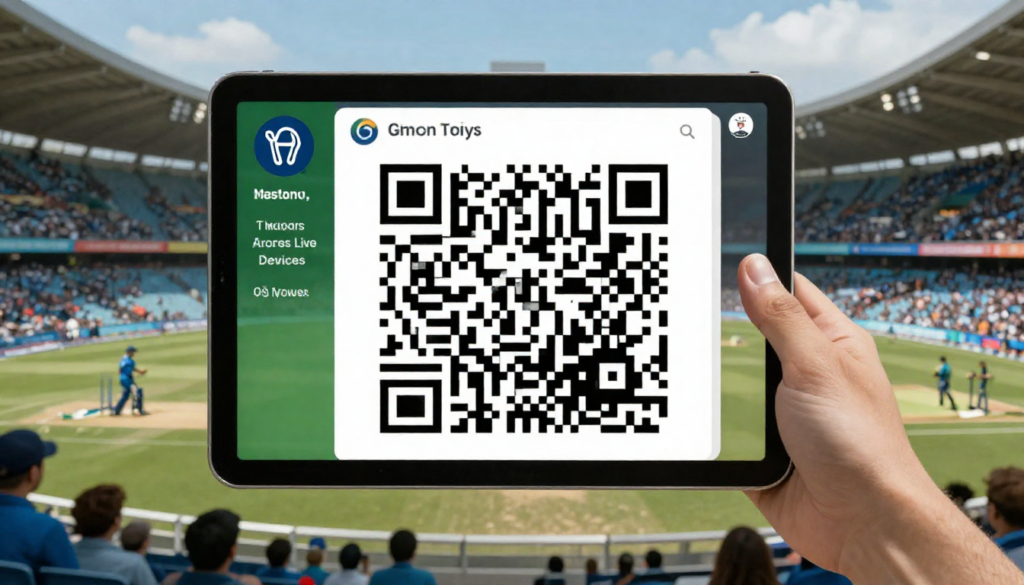
Match-day traffic behaves differently from ordinary web traffic. People do not arrive slowly, compare options, and browse at ease. They tap fast, switch devices often, and expect the page to open on the right screen without friction. That makes live sports sharing a product problem, not just a link problem.
QR codes fit that environment well because they remove typing, reduce copy-paste errors, and move users from one device to another in seconds. On a fast-moving sports night, that small gain matters. A clean scan can be the difference between reaching the score page instantly and losing attention before the page even loads.
For sports creators, page owners, and link-sharing tools, the real value of QR codes is not novelty. It is control. A good QR flow guides traffic quickly, keeps the landing experience simple, and helps the audience reach the right page with less confusion.
Why Match-Day Traffic Needs Faster Sharing
Sports traffic comes with urgency built into it. A late wicket, a tight chase, or a final-over swing creates a short window when people want information immediately. That is not the same behavior seen in a blog visit or a general product search.
This is also why long links perform poorly in live-event moments. They look messy in stories, hard to trust in screenshots, and awkward to move between apps. A user watching on TV, chatting on a phone, and browsing on a laptop is unlikely to type a full URL accurately under time pressure.
A scan-based flow fits that behavior more naturally. Someone sees the code on a second screen, on a poster, in a social story, or beside a score graphic, then lands on the intended page without the usual detour. That creates less drop-off and a smoother path during moments when attention is already fragile.
Where QR Codes Work Better Than Plain Links
When fans search for live ipl cricket updates, they often move between multiple digital surfaces in a short period of time. A QR code works well in that kind of flow because it reduces friction at the exact point where interest is highest.
The strength of QR codes is context. A plain link often works only when it can be tapped directly. A QR code works across screens. It can sit on a desktop page and open on a phone. It can appear in a social image and still remain useful. It can connect offline and online spaces in a way that normal URLs cannot.
That makes QR codes especially practical for match-day use cases such as venue posters, shared scorecards, social media graphics, WhatsApp images, or bio pages that route people toward live updates. The code acts like a shortcut, but the shortcut only feels smart when the destination is equally clear.
A cluttered landing page ruins the benefit. So does a code that opens to an overloaded hub with too many choices. The match-night user usually wants one thing first. Latest update. Current score. Clear path. The better the QR flow respects that priority, the more useful it becomes.
Build a QR Flow That Feels Clean
The strongest QR journeys are surprisingly simple. One scan. One expected destination. One obvious action.
That simplicity starts with the visual context around the code. If the user cannot tell where the code leads, the scan becomes a gamble. Labels matter. A short line such as “Open live match page” or “Check current score” works better than vague phrases that sound promotional. Match-day users do not want mystery. They want clarity.
Destination design matters even more. The first screen should load quickly, show current relevance, and avoid visual overload. A QR code connected to a slow page loses its advantage immediately. A good landing experience usually includes the latest score area, a timestamp, and one clear path forward.
A reliable QR setup for live traffic usually works best when it includes these elements:
- A short, direct label that explains what the code opens.
- A mobile-first landing page with one clear purpose.
- A short link or smart redirect behind the QR for easier management.
- Minimal visual clutter around the code so it remains easy to scan.
- Testing across multiple phones and lighting conditions before the event begins.
These details sound small, but match-day traffic magnifies every weak point. If scanning feels awkward or the landing page hesitates, users rarely give the setup a second chance.
The Mistakes That Quietly Hurt Match-Day QR Performance
Most QR failures do not come from the code itself. They come from the decisions around it.
One common mistake is sending users to a page that tries to do too much. A page full of banners, extra navigation, popups, and competing calls to action breaks the fast path the QR code was supposed to create. Match-night visitors are not in a browsing mood. They want a useful answer quickly.
Another mistake is designing the QR code like an ornament. If the code is too small, low-contrast, buried inside a busy graphic, or placed where glare interferes, scans drop. Good design should support the code, not fight it.
Cross-device behavior is another hidden problem. A setup may work well from desktop to phone, then fail in a social-app browser or open awkwardly inside a compressed in-app view. That is why testing matters. A code should be checked in the same environments where real users will meet it, not only in clean internal demos.
Scan Fast, Reach Faster
QR codes do not have value simply because they appear to be trendy or modern. They acquire value when they can save users from additional steps at the time when they are least willing to accept more struggle and friction.
During matches, that turns them into more than just design extras. They serve as a means of managing traffic. Creators, page owners, and link platforms get help from them in directing users efficiently and timely from one screen to another with lesser wastage. And the more straightforward the way, the more users are shown to stick to it.
A strong match-day QR experience depends on restraint. Clear purpose. Clear label. Clear landing page. When those three parts align, the scan feels natural, and the page earns attention before the moment passes.