
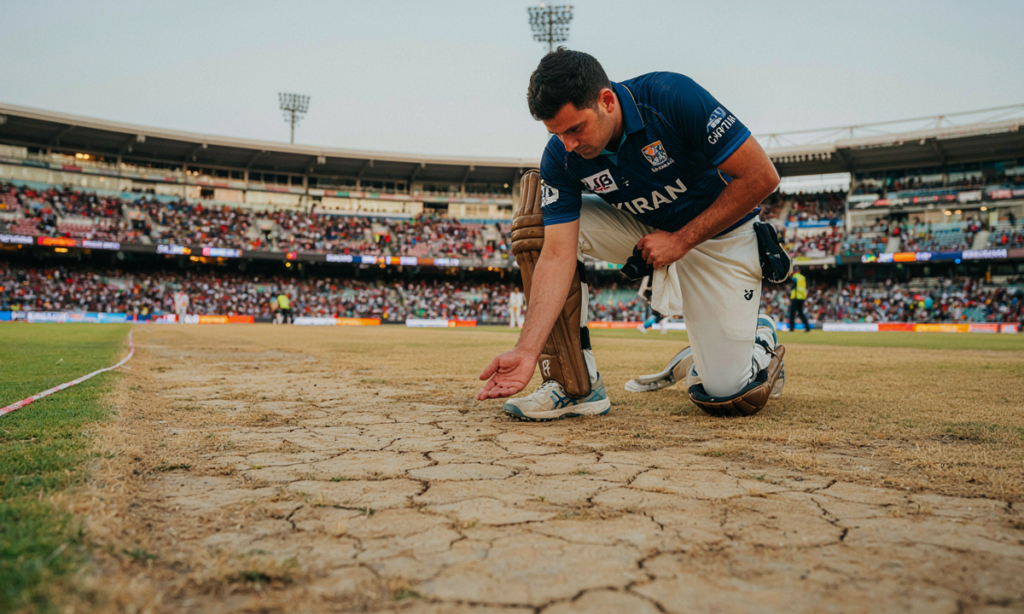
A cricket match begins long before the opening delivery. Coaches, captains, analysts, and players study the surface because the pitch determines how the ball may move, bounce, grip, and lose pace. These judgments influence selection, batting order, bowling combinations, and the decision made at the toss. A team that reads the conditions well can build a plan around the likely pattern of play before either side scores a run.
Match followers may click here while moving between previews, statistics, and other online content, but for the teams, pitch analysis is a technical process. The surface does not provide certainty, yet it changes the probability of specific outcomes. Preparation therefore depends on identifying which skills are most likely to matter and how those skills should be distributed across the lineup.
Surface Composition Shapes Selection
The first strategic question concerns the type of pitch. A hard surface may offer pace and bounce, while a dry surface may slow the ball and assist spin. A pitch with grass can support seam movement, especially when moisture remains below the top layer. A worn surface may create uneven bounce or increase grip as the match continues.
These differences affect squad balance. On a pitch expected to favor pace, a team may select an extra fast bowler and reduce the role of spin. On a dry surface, the same team may use two or three spin options and add batters who handle slower bowling well.
Selection is not based only on bowling type. Batting technique also matters. A player who scores through horizontal shots may benefit from consistent bounce, while a batter who uses footwork against spin may be better suited to a surface where the ball grips. Teams therefore assess whether each player’s method matches the expected conditions.
Moisture Changes Early-Innings Planning
Moisture is one of the main factors in pre-match strategy because it can affect both movement and pace. A surface with moisture may allow the ball to seam after pitching, particularly during the first phase of the match.
This influences the toss. A captain may choose to bowl first to exploit movement before the surface dries. The decision can also depend on cloud cover, humidity, and the time of day. If conditions are expected to improve for batting, chasing may appear safer.
Batting teams prepare for this possibility by adjusting their early approach. Openers may be instructed to leave more deliveries, play closer to the body, and avoid driving before judging movement. The goal is not always to score quickly. It may be to preserve wickets until conditions become less favorable for the bowlers.
Bowling teams make the opposite calculation. They may use attacking fields, full lengths, and repeated spells from their main seamers because the best opportunity may exist only for a limited period.
Grass Cover Affects Line and Length
Grass on the pitch often attracts attention, but its effect depends on density, moisture, and root structure. Grass does not always guarantee large movement. In some cases, it helps bind the surface and improves pace.
Teams consider how the ball is likely to behave rather than relying on appearance alone. If the grass is expected to support seam movement, bowlers may target a fuller length to bring the edge and stumps into play. If the pitch is firm and quick, they may use shorter lengths to exploit bounce.
Batters also change their setup. They may stand deeper in the crease, reduce front-foot commitment, or prepare to play under the eyes. A batter who normally attacks through the covers may postpone that option until the movement becomes predictable.
These adjustments are discussed before the match because early technical errors can determine the result before either side has time to adapt.
Dry Pitches Increase the Role of Spin
A dry pitch can alter strategy even before visible turn appears. As the surface breaks down, the ball may grip, bounce unevenly, or slow after pitching. Teams must decide whether the expected deterioration justifies selecting more spin.
The decision is more complex in short formats, where the pitch may not have enough time to change. Even then, a dry surface can make pace-off deliveries effective. Slow bowlers, cutters, and changes of speed may become more useful than direct pace.
Batting plans also change. Teams may promote players who use their feet, sweep well, or rotate strike against spin. A lineup filled with batters who rely on pace can become vulnerable if the ball stops in the surface.
Fielding strategy is affected as well. Captains may prepare for catches near the bat, mis-hits into the leg side, or slower scoring through the middle phase. The pitch therefore shapes not only who bowls but also where fielders are likely to be placed.
Pitch Pace Determines Scoring Methods
The speed of the surface has a direct effect on shot selection. On a quick pitch, batters can use the bowler’s pace and score behind the wicket. On a slow pitch, the ball may arrive later than expected, making timing more difficult.
Before the match, analysts identify which scoring zones are likely to be available. A slow surface may reward straight hitting, placement, and running between wickets. Cross-batted shots can become riskier if the ball does not come onto the bat.
Bowlers adjust accordingly. On a slow pitch, they may use cutters, slower balls, and wide lines that force batters to generate power. On a quick pitch, they may attack with pace, bounce, and fielders positioned for edges or mistimed pulls.
These plans help teams avoid wasting overs while trying to discover a method during the match.
Boundary Size Interacts With Pitch Behavior
Pitch conditions cannot be assessed in isolation from the ground. A slow surface with short boundaries may still produce high scores because batters do not need clean contact to reach the rope. A quick pitch with large boundaries may reward placement rather than power.
Teams combine both factors when selecting bowlers and setting targets. A spinner who forces batters to hit toward the longer side may be valuable on a turning pitch. A pace bowler who uses short balls may be less effective if one boundary is too short to protect.
Batting order decisions can also reflect the ground dimensions. A left-handed or right-handed batter may be promoted to target a specific boundary or disrupt the opposition’s field plan.
The Toss Becomes a Risk Decision
The toss receives attention because it converts pitch analysis into an immediate choice. Captains must decide whether conditions will improve, remain stable, or deteriorate.
Batting first may be preferred when the pitch is expected to slow or break up. Bowling first may be more attractive when moisture, movement, or evening conditions favor the attack. Dew can also influence the decision because it may reduce grip for bowlers later in the match.
No decision removes risk. A captain can read the surface correctly and still lose because the weather changes or the pitch behaves differently from expectations. The purpose of analysis is not to predict every detail but to choose the option with the strongest probability.
Contingency Plans Remain Essential
Pitch reports guide strategy, but teams must prepare for the possibility that the surface behaves differently. A pitch expected to turn may remain flat. A surface predicted to support seam may offer little movement.
Strong teams therefore create alternative plans before play. They identify backup bowlers, flexible batting positions, and different scoring methods. Captains also decide how quickly to abandon the original plan if the evidence on the field contradicts the pre-match assessment.
Pitch conditions influence almost every strategic decision before the first ball, from team selection to the toss and the opening field. The surface does not decide the match by itself, but it defines the problem each team must solve. The side that interprets that problem accurately begins with a tactical advantage.