
Quick Answer
Pick kilim rugs in Dubai for lightweight, flat-woven colour and pattern, jute carpets in Dubai for an affordable natural texture in dry rooms, and Persian carpets in Dubai for hand-knotted heirloom quality that can last generations with proper care.
Key Facts
| Rug Type | Construction | Typical Material | Best Room |
| Kilim | Flat weave, no pile | Wool, cotton | Living rooms, hallways |
| Jute | Woven natural fibre | Jute (bast fibre) | Bedrooms, dry living areas |
| Persian | Hand-knotted pile | Wool, silk, cotton base | Majlis, formal lounges |
Introduction
Rugs do more than decorate. In Dubai’s air-conditioned interiors, they soften hard floors, reduce echo and define seating zones. Yet the market is crowded with machine-made imitations and unclear labels. This guide explains how each rug type is made, how it behaves in UAE homes and how to buy with confidence.
Kilim Rugs: Flat-Woven Colour
A kilim is made by weaving coloured weft threads tightly through the warp, so there is no knotted pile. The result is thin, light and reversible. Kilims originate across Anatolia, the Caucasus, Iran and Central Asia, and geometric motifs are typical.
Why People Choose Them
- Easy to roll, move and store
- Work well over carpet or tile
- Suitable for casual or eclectic interiors
- Often more affordable than knotted rugs
Watch-Outs
Because they are thin, a non-slip underlay is essential. Cheap dyes can bleed, so test an inconspicuous corner with a damp white cloth.
Jute Carpets: Natural, Textured and Practical
Jute is a bast fibre from the stem of the jute plant, grown mainly in South Asia. It is biodegradable and has a warm, golden look that suits neutral and coastal styles.
Strengths and Limits
Jute is coarse underfoot and absorbs moisture, so avoid bathrooms, covered balconies and spaces prone to spills. Humidity can cause staining or mildew if the rug stays damp. Place it in dry living areas, bedrooms and home offices, and blot spills immediately instead of rubbing.
Practical Example
In a rental apartment, a large jute rug under a coffee table and sofa instantly added warmth to a bare porcelain floor. The tenant added a felt-and-rubber pad to prevent sliding and vacuumed gently along the weave to remove dust.
Persian Carpets: Hand-Knotted Heritage
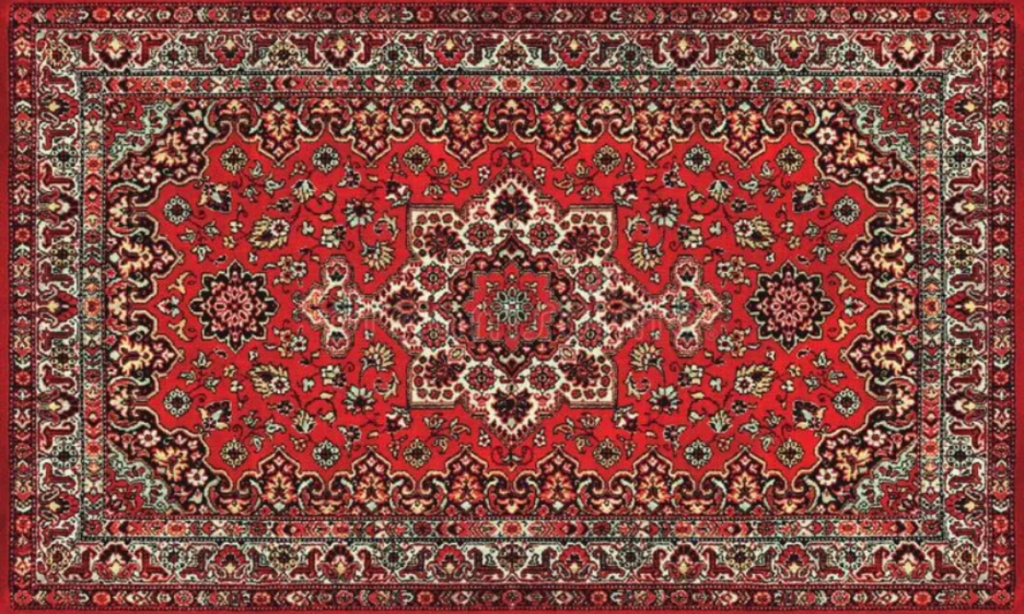
Genuine Persian carpets are hand-knotted, often in wool or silk, with designs linked to regions such as Tabriz, Isfahan, Kashan, Qom and Nain. Quality depends on knot density (knots per square inch), fibre quality, dye stability and symmetry of the design.
How to Judge Quality
- Turn the carpet over: clear, sharp pattern lines suggest hand knotting.
- Check the fringe: it should be part of the foundation, not sewn on.
- Look for even pile height and straight edges.
- Ask for the knot density, origin and fibre content in writing.
- Request a certificate or detailed invoice from the seller.
Value Over Time
Well-kept hand-knotted carpets may hold or increase value, but this is not guaranteed. Treat them as long-term furnishings rather than pure investments.
Comparison Table
| Feature | Kilim | Jute | Persian |
| Price level | Low to medium | Low | Medium to very high |
| Softness | Low | Low | High |
| Moisture tolerance | Medium | Low | Medium |
| Lifespan | Many years | Several years | Decades |
| Cleaning | Professional or gentle | Spot clean | Professional recommended |
Care in Dubai’s Climate
- Rotate rugs every six months to even out sun and wear.
- Use blinds or curtains to protect dyes from direct sunlight.
- Vacuum without a beater bar on delicate fibres.
- Keep rugs dry and ensure air circulates underneath.
- Use a good quality pad to protect both the floor and rug.
A specialist retailer such as Risala Furniture and Interiors LLC can advise on sizing so that front legs of sofas sit on the rug, a common design rule that makes a room feel balanced.
Choosing the Right Size
Leave 20 to 30 cm of bare floor around the rug in a living room. In dining areas, the rug should extend at least 60 cm beyond the table edge so chairs stay on it when pulled back.
Frequently Asked Questions
- What is the difference between a kilim and a Persian carpet? A kilim is flat-woven without pile; a Persian carpet is hand-knotted with a raised pile.
- Are jute carpets durable? They are reasonably durable in dry, low-spill rooms but not ideal for high-moisture areas.
- How can I tell if a Persian carpet is genuine? Check the back for knots, confirm the fringe is integral and ask for documentation.
- Can kilim rugs go on carpet? Yes, with a suitable grip layer to prevent shifting.
- Do rugs suit homes with pets? Wool and kilim handle pets well; jute can snag with claws.
- How often should I clean a hand-knotted carpet? Vacuum weekly and arrange professional cleaning every few years.
- Is jute eco-friendly? It is a renewable, biodegradable fibre, though sourcing and treatments vary.
- What size rug suits a majlis? Usually a large rug that fits the seating perimeter with the central area exposed.
- Are wool rugs hot in summer? Indoors with air conditioning they are comfortable, and wool is naturally breathable.
- Where does Risala Furniture and Interiors provide its services? Risala Furniture and Interiors LLC provides its services in UAE ,OMAN , QATAR , SAUDI ARABIA , KUWAIT , BAHRAIN and all across the Gulf and Middle East region.
Key Takeaways
- Kilim is light and versatile, jute is natural and affordable, Persian is long-lasting.
- Check construction, fibre and documentation before buying.
- Keep jute dry and protect dyes from sun.
- Use pads and correct sizing for comfort and safety.
Conclusion
The right rug links style, comfort and care. Start with the room, then select a construction that suits traffic and moisture. For sizing help and a curated mix of rug types, talk to Risala Furniture and Interiors LLC. Suggested sources: Oriental carpet trade guides, textile conservation bodies and manufacturer care leaflets.